
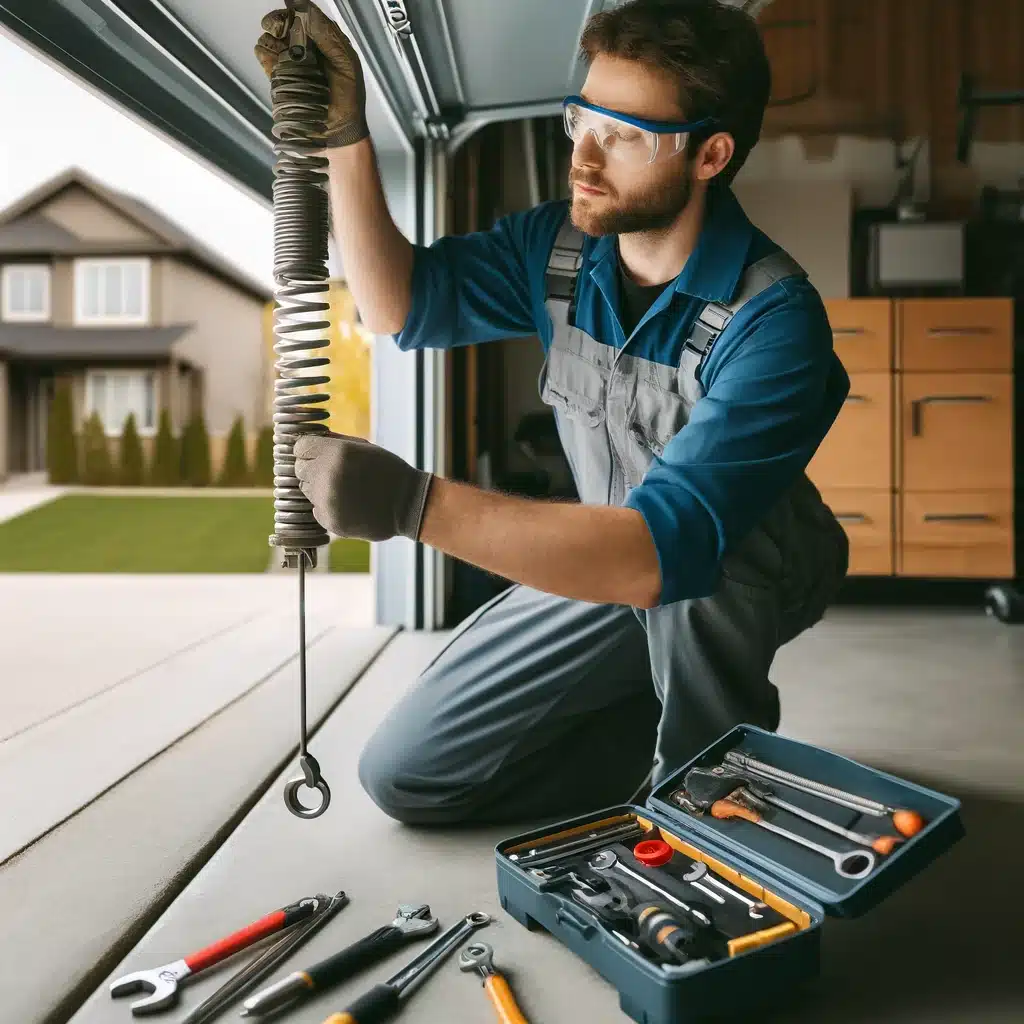
Your garage door relies on its springs to lift, lower, and balance the full weight of the door every time you use it. When a spring breaks or wears out, replacing it with the correct size is essential for safe and smooth operation. Many homeowners look up how to measure garage door spring replacement so they can understand what is involved, but the process is more detailed and risky than it may seem at first.
This guide explains the measurement steps, what each dimension means, the dangers involved, and why accurate spring sizing is critical for the safety of your garage door system.
Why Accurate Spring Measurement Is Essential
Garage door springs carry most of the weight of the door. They make it possible for your opener to lift the door smoothly without struggling. Correct spring size determines:
- How well the door stays balanced
- How easily it opens and closes
- How long the opener lasts
- Whether the system operates safely
Using the wrong spring size can cause the door to slam shut, rise unevenly, or strain the motor. Even a slightly incorrect measurement can result in poor performance or early failure. That is why accuracy is essential when measuring or replacing springs.
Understanding the Different Spring Types Before Measuring
Before you can measure a spring, you need to identify what type of system you have. The type determines the measurement method and the complexity of the replacement.
What Are Garage Door Springs?
Garage door springs store energy that helps lift and lower the door. These springs stretch or twist every time the door moves. Over time, the metal weakens, eventually leading to failure.
Identifying Your Spring System
Homeowners typically see one of two spring setups:
- A single spring mounted above the garage door
- A two spring setup, which is common on heavier or wider doors
A two spring system generally provides better balance and smoother operation. If one spring breaks, the other is usually worn as well, which is why professionals typically replace springs in pairs.
Simply identifying your spring setup can be risky because garage springs remain under tension even when damaged. Always approach with caution and avoid touching the spring.
Tools You Should Have Before Measuring
If you want to understand how a technician determines spring size, the following tools are typically used:
- A flexible measuring tape (at least 36 inches)
- A sturdy ladder
- Safety glasses
- A marker or notepad for recording measurements
These tools are for explanation only. Measuring springs directly often requires partial disassembly, and attempting to do so without training is unsafe.
How to Measure Garage Door Spring Correctly
This section covers the standard measurement steps that professionals take. These steps show what is involved, but they are not intended as DIY instructions.
Step 1: Measure the Length of the Spring
The spring length is measured from one end of the coil to the other, without stretching it. Length affects how much force the spring can store and how well it balances the door.
Even small length errors can result in the door being out of balance or harder to lift.
Step 2: Measure the Inside Diameter
The inside diameter of the spring determines how much room the spring has to flex and how it fits on the hardware. Some springs have the diameter stamped on the winding cone, but not all do.
If the diameter is incorrectly matched, the spring may not fit the system properly, which affects performance and safety.
Step 3: Measure the Wire Size or Coil Size
This is one of the most important measurements. Professionals measure a certain number of coils, such as 10, 20, or 40, then use that measurement to calculate the wire gauge.
Wire size determines how much weight the spring can lift. Incorrect wire size can cause the door to:
- Lift too quickly
- Struggle to rise
- Wear out the opener
- Become unbalanced
This is the measurement homeowners most often get wrong, which is why spring sizing requires trained expertise.
Step 4: Count the Number of Springs
If your door uses two springs, they should work together. In many cases, both springs must be replaced even if only one breaks because the remaining spring has the same amount of wear.
Replacing only one can:
- Make the door operate unevenly
- Cause the new spring to wear out faster
- Create strain on the system
Professionals take this into consideration when selecting the correct replacement springs.
Warning: Measuring Springs Can Be Dangerous
Garage door springs store a significant amount of force. Even a broken spring can hold tension that can cause injury if handled incorrectly. Tightening or loosening spring hardware requires specialized tools, training, and controlled procedures.
Risks of DIY measurement include:
- Springs snapping unexpectedly
- Door falling suddenly
- Hardware whipping loose
- Hand or face injuries from tension release
Spring systems are one of the most dangerous components on a garage door. For this reason, measurement, removal, and replacement should only be handled by a trained technician.
Signs You Need New Garage Door Springs
You may need spring replacement if you notice:
- The door feels unusually heavy
- The door only opens a few inches
- The opener struggles or stops
- The door rises unevenly
- Visible gaps appear in the spring coils
- You hear a loud popping or snapping sound
- The door slams shut instead of lowering smoothly
These symptoms appear when the spring can no longer support the door’s weight.
Why Homeowners Should Avoid DIY Spring Replacement
Even if you understand the steps for how to measure garage door spring replacement, handling springs without training involves significant risk. DIY attempts often lead to more damage or unsafe operation.
Reasons homeowners should avoid DIY replacement:
- Springs require precise tensioning
- Wrong measurements lead to incorrect sizing
- The opener can be damaged by poor spring balance
- Warranty concerns can arise after improper repairs
- The door can become dangerous to operate
Professional service ensures the system is restored to safe working condition.
When to Call a Professional for Accurate Spring Measurement
A trained technician should handle spring measurement when:
- The spring has already broken
- The door is stuck and will not open
- The door feels too heavy
- The door rises unevenly
- You are unsure which springs your system uses
- The system has never been serviced
Professionals follow strict safety steps and use specific tools to determine the exact spring size needed.
Professional Garage Door Spring Services for Virginia Homeowners
Homeowners across Virginia rely on their garage doors multiple times a day, and spring failure can disrupt routines quickly. Wallen Garage Door Service provides accurate spring measurement, proper replacement, and careful balancing to make sure your garage door operates smoothly and safely.
Our technicians understand the different spring systems used in Virginia homes and how weather, age, and usage affect their lifespan. We use high-quality replacement components and complete a full safety inspection after every repair.
Whether your spring has already broken or your door is showing early signs of stress, our team can identify the correct spring size and restore your system’s performance.
Call to Schedule Professional Spring Measurement and Replacement
If your garage door is heavy, noisy, or refusing to open, the springs may be worn or broken. Measuring and replacing springs requires expertise, and the safest option is to call a trained professional.
For accurate spring sizing and dependable garage door repair, contact Wallen Garage Door Service at (757) 219-2124.
Our team is ready to help restore your garage door to safe and reliable operation.