
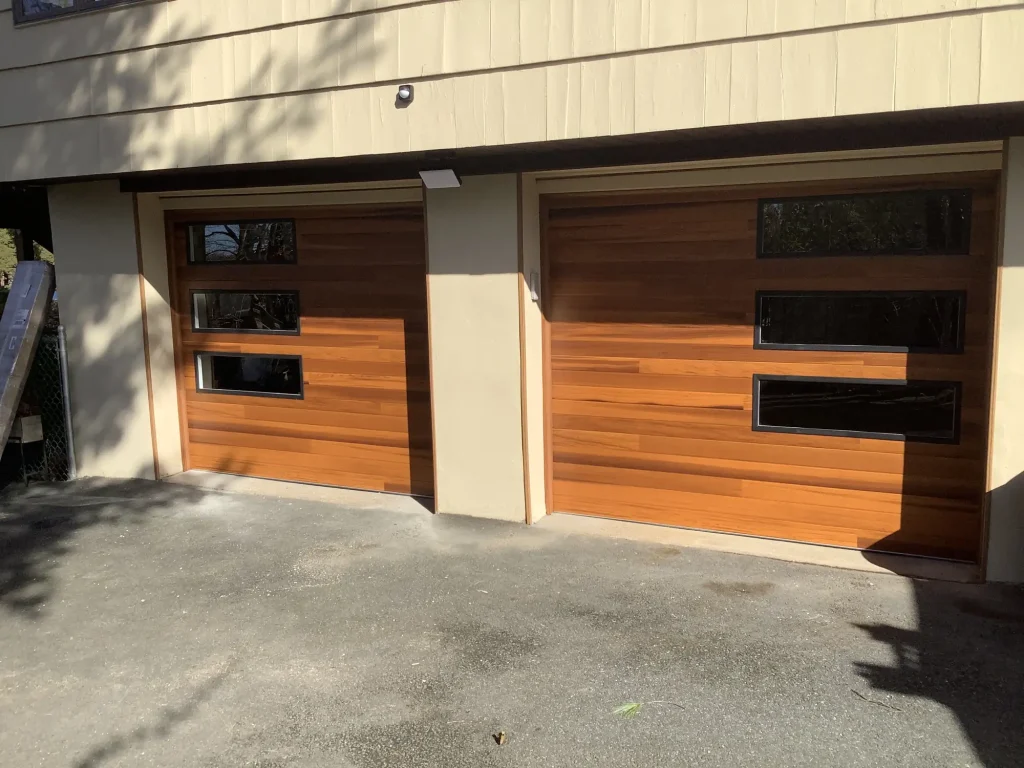
You turn on the garage lights after dinner and realize the window design you liked in the showroom now needs a closer privacy check. Garage door windows create a potential view into the room; placement, glazing, and the actual outside sightline determine whether that view works for you.
We’re Wallen Garage Doors, a garage door service company based in Newport News, Virginia, serving homeowners across Hampton Roads. The useful choice is not “glass always looks better,” but whether windows solve a daylight or design need without exposing more than you want.
Start by comparing a solid door, a high window row, and any larger glass layout you are considering. A windowless door is a valid answer, especially when privacy matters more than natural light.
Windows or No Windows: Start With Your Priorities
| Your Priority | Option to Compare | What to Verify |
| No view through the garage door | Solid sections without windows | Exterior style and whether existing lighting is sufficient |
| Daylight With Limited Exposure | A high window row | Real sightlines from the sidewalk, driveway, and higher ground |
| Decorative Glass Without a Clear View | A sample of the proposed obscure glazing | What remains visible under actual day and night lighting |
| A Bright Workspace | More glazing or a larger window layout | Light, privacy, solar heat gain, and the complete door specification |
| Temperature Control | Solid and glazed configurations With documented ratings | Whole-door thermal information, not only a panel R-value |
| Simple Upkeep | Solid sections or fewer simple openings | Cleaning access and product-specific care instructions |
This is a comparison guide, not a promise that one glass label delivers a certain privacy level. Use the proposed product and your own viewing angles to make the decision.
DASMA identifies glazing area, glazing type, door direction, and climate as factors affecting solar heat gain. That means the window choice also deserves a practical light-and-heat review, not just a curb-appeal vote. [1]
Decide What You Want Daylight to Do
Think about the times you actually use the garage. A brief daytime trip to a freezer presents a different lighting need from an afternoon at a workbench or an evening workout.
Look at the closed door with the lights off during a safe, ordinary visit, and note which areas feel too dark. Existing side windows or a well-lit entry may already meet your needs, leaving garage door glass as a design preference rather than a practical necessity.
DASMA defines visible transmittance as the amount of visible light passing through a type of glazing. It is a useful property to ask about, but it is not a rating for how private the garage will feel from the sidewalk. [1]
Ask Wallen to compare realistic options during garage door installation planning. Describe the problem you want to solve before choosing a decorative insert or the largest available glass area.
Protect Privacy With Placement Before Appearance
Begin with the outside view, not the catalog photograph. Stand on your driveway and other places you are allowed to access, then consider what a person can see through the proposed window location.
Compare a high row with a lower arrangement using an accurate drawing or a representative installed example. Do not assume that “above eye level” from inside the garage also means above a passerby’s view from a raised sidewalk or sloped driveway.
For a Virginia Beach property with a front-facing garage near a public walkway, that approach angle matters to the buying decision. A row that looks private from the garage floor may face someone walking uphill toward the house.
Think about what you want to keep out of sight: tool storage, bicycles, vehicle contents, or the door leading into the house. If the proposed placement cannot meet that requirement, compare a different layout or a solid door before debating glass colors.
Test the Actual Glass in Daylight and After Dark
Names such as clear, tinted, frosted, and obscure are starting points for a conversation, not proof of a particular privacy result. Ask to see the exact proposed sample rather than a photograph of a similar finish.
View the sample from both sides, with light behind it and with the background you expect in the garage. Ask what details, outlines, or movement you can make out, and decide whether that amount of visibility is acceptable.
Do not approve the order on a daylight-only impression. Repeat the comparison under lighting representative of the garage after dark, when you may be sorting tools or walking between the car and house.
Treat this as a buyer’s acceptance check, not a laboratory privacy test. A small handheld sample also cannot prove the view through an entire installed window row, so request a comparable installed example when privacy is a deciding factor.
If you cannot verify an acceptable result, do not buy on a promise that tint will solve it later. A solid section avoids a view through that part of the door without relying on a particular glazing appearance.
Separate Privacy From Security
Privacy asks what someone can see; security asks how the property is protected against entry. Do not let a privacy-glass description stand in for a documented security feature or a conversation about the rest of the garage.
Keep the comparison concrete: does the layout expose the storage you care about, and does the proposed product have the construction you need? Avoid assuming that every glass option has the same material, breakage characteristics, or approved use.
Ask for the exact glazing description on the written proposal. If impact performance or another special requirement matters, have the installer identify the applicable specification rather than treating dark or patterned glass as evidence of protection.
A windowless door can meet a strong privacy preference, but it is not a guarantee against unauthorized entry. Make the window choice alongside sensible storage and access-control decisions, not as a replacement for them.
Match the Windows to the Whole House
Review the entire front elevation before settling on a grille pattern. A design can look attractive in a cropped product image while competing with shutters, porch rails, front windows, and the lines of the roof.
For a home with divided-light windows, compare a restrained pattern that echoes those proportions rather than copying every small detail. For a simpler modern exterior, compare clean rectangular openings with a solid door and decide which looks more deliberate.
Color can help connect the garage door to existing trim, but it does not require adding glass. If the facade already has several strong patterns, panel shape and finish may provide enough interest on their own.
Wallen’s custom garage door design service can help turn those preferences into a specific comparison. Bring a straight-on exterior photo and a second photo from the angle at which you normally approach the driveway.
Use the build-your-door tools for visual comparison, not proof of privacy or thermal performance. Confirm that the final proposal matches the actual door size, window layout, glazing, and construction you reviewed.
Compare Thermal Performance as a Complete Door
An insulation number needs context. DASMA distinguishes a calculated door-section R-value from a tested whole-door U-factor and warns that the two are not comparable ratings for the same thing. [2]
A higher R-value means greater thermal resistance for the material or section being described. A lower U-factor means less thermal transmittance through the tested assembly, which is why you should ask what the number actually covers. [2]
Do not apply the advertised insulation value of a solid section to every windowed configuration. DASMA explains that joints, stiles, weather seals, and other assembly details affect whole-door performance beyond the insulation in a section. [2]
For an attached garage or one you use as a workspace, request documentation for the configuration you are buying. Ask whether the available whole-door rating represents the proposed glazing arrangement and what remains unknown if it does not.
Compare like with like before paying for an upgrade. Do not accept a claimed utility-bill saving based only on a rendering, a glass label, or a panel R-value.
Consider Sun Direction as Well as Glass Area
DASMA treats solar heat gain as a consideration whenever glazing is present in a door. The effect depends on the amount and type of glazing, the direction the door faces, and the temperature and cloudiness of the climate. [1]
For your Hampton Roads home, note when sunlight actually reaches the opening and where you plan to work inside. Record shade from the house, nearby buildings, or trees rather than assuming another home’s window layout will perform the same way.
Ask about solar heat gain and visible transmittance separately. DASMA describes them as different considerations: one concerns admitted solar heat, while the other concerns visible light passing through the glazing. [1]
The goal is useful light without buying an unwanted tradeoff. If the documented choices do not match your priorities, reduce the proposed glass area or keep the door solid rather than assuming a premium option is automatically better.
Plan for Cleaning and Future Service
Before choosing several small panes or a high window row, ask how the installed glass will be cleaned safely. Review access from inside and outside without leaning on the door, standing beneath a moving door, or reaching into its hardware.
Get the actual care instructions for the selected glazing and finish. Do not assume that an abrasive cleaner, pressure washer, film, or decorative covering is appropriate for every product.
DASMA recommends reading the manuals for both the door and opener and arranging professional assistance when wear, damage, or improper operation appears. Its safety warning also reserves spring, cable, bottom-bracket, and support adjustments for trained technicians. [3]
If you are considering windows in an existing door, have its identity and compatible options checked before approving work. Do not cut openings, swap sections, or adjust springs to accommodate a design change yourself.
If the existing door is crooked or has visible spring or cable damage, No. Stop using the door. Ask for professional spring-system service before pursuing a cosmetic modification.
Compare Costs Without Mixing Different Projects
Price the window option against a solid version of the same door. Comparing different door models can hide the added cost of the glazing and make a simple upgrade look more or less expensive than it really is.
Ask for a solid configuration, a standard window arrangement, and the preferred specialty option. Have each proposal identify the glazing, number and size of openings, decorative components, installation scope, removal, and any required related work.
Those details let you see whether a difference comes from the windows or from changing the whole door. A premium construction package and a different glass layout should not be treated as one unexplained “window upgrade” charge.
Confirm the final total and what is excluded before ordering. If the windows strain the budget without solving a real light or design problem, put the money toward the door construction and installation you actually need.
Know When to Choose a Solid Door
Choose no windows when avoiding a view inside is your strongest requirement and you cannot verify an acceptable glazed option. That is a practical preference, not a compromise you need to apologize for.
A solid door also deserves serious consideration when the garage already has enough light or you dislike the extra cleaning discussion. You can still compare panel proportions, color, finish, and hardware to create a design that fits the house.
If a proposed window package fails a must-have requirement, pause the order. Do not trade away privacy or a documented performance priority just because the first rendering looked good.
Frequently Asked Questions
What Garage Door Glass Gives the Most Privacy?
Do not choose on a glass name alone. Compare the exact samples from the relevant outside viewpoints, and choose a solid section if you cannot verify the level of privacy you need.
Can People See Through Frosted Windows at Night?
Do not assume the label guarantees that nothing will be visible. Check the actual sample or a comparable installed door with lighting representative of your garage after dark.
Are High Windows Better for Privacy?
A high row is worth comparing, but the outside viewing angle matters. Check raised sidewalks, sloping driveways, and nearby viewing positions rather than relying on height alone.
Are Windowed Doors Less Energy Efficient?
Compare documented configurations instead of assuming every windowed door performs the same. DASMA distinguishes whole-door U-factor from section R-value, so ask which rating applies to the proposed assembly. [2]
How Much Do Garage Door Windows Cost?
The total depends on the chosen door, glazing, window layout, and installation scope. Request comparable written proposals that separate the window option from changes to the underlying door and related work.
Can I Add Windows to My Existing Door Myself?
Have a professional identify the door and verify compatible options first. Do not cut sections or adjust spring and cable hardware; those high-tension components are not DIY work. [3]
Choose a Door That Fits Your Daily Life
Wallen Garage Doors helps homeowners in Virginia Beach and across Hampton Roads compare practical door options. Its published approach is “No hidden fees, no upselling, no pressure,” so keeping a solid door belongs in the conversation alongside adding windows.
Call 757-256-4543 or request a design conversation. Bring exterior photos, your privacy priorities, and the times you use the garage, then ask for a clear written comparison before you choose.