
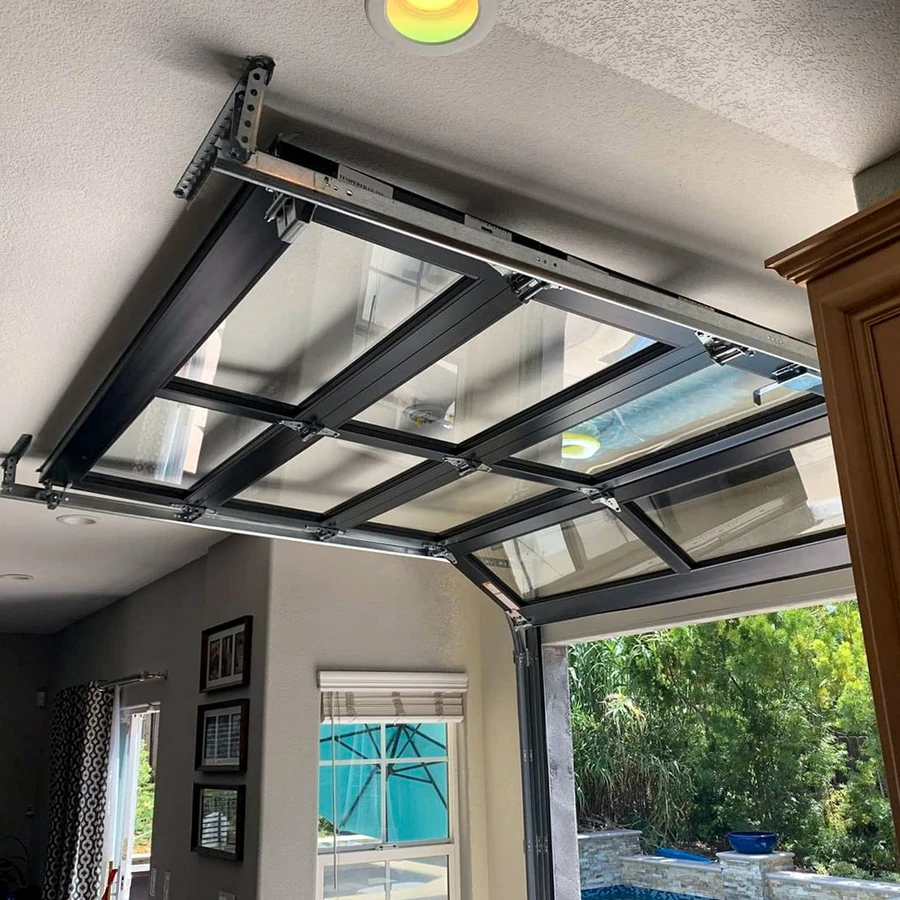
You press the wall button with your car still inside, and the garage door jerks rises in short, uneven jumps. Stop there: rough movement calls for an inspection, not another push of the button.
We’re Wallen Garage Doors, a garage door service company based in Newport News, Virginia, serving homeowners in Hampton Roads. A jerking door needs a whole-system diagnosis before anyone decides whether the problem is the door, its hardware, or the opener.
DASMA’s residential maintenance guide says a door should move freely and without difficulty, and it directs owners to a trained technician when operation is improper. That is the starting point here, not a promise that one spray or adjustment will solve every shudder.
Safety First: Leave Springs and Cables Alone
No. Stop using the door. That is the answer if you see a damaged spring, frayed or hanging cable, crooked section, displaced roller, or loose support.
Keep people, pets, and vehicles away from the opening. Do not pull the emergency release, lift the door by hand, attempt a balance test, or prop up a partly open door while investigating a fault.
DASMA warns that springs are under high tension and that bottom brackets, cables, supports, and red fasteners must not be loosened or adjusted by homeowners. Only trained door system technicians should adjust those components.
The checks below are visual only, from the floor, with no new operating cycle. If the door is not already fully closed and level, skip them and call for service rather than moving it into a convenient inspection position.
What the Symptom May Mean on Garage Door Jerks
These are inspection clues, not confirmed diagnoses or a ranking of failure rates. DASMA identifies rollers, hinges, springs, and panels as parts to inspect for wear or damage; the pattern alone cannot tell you which part needs replacement.
| Symptom | Likely Cause to Investigate | DIY? |
| Repeated bump or chatter | Roller, hinge, or other moving hardware needing inspection | Visual observation only; no replacement or adjustment |
| Catch previously noticed at one height | Track path, roller, or section alignment issue | Visual observation only; do not straighten the track |
| One side rises before the other | Uneven support, cable, spring, or track problem | No. Stop using the door. |
| Loud bang followed by rough movement | Possible spring or supporting hardware failure | No. Stop using the door. |
| Roller outside the track or visibly bent support | Displaced or damaged guiding hardware | No. Stop using the door. |
| Level door surges under opener power | Door resistance or an opener fault requiring diagnosis | No adjustment; have the door and opener checked together |
1. Worn or Damaged Rollers
Rollers are part of the system that guides a sectional door along its tracks. DASMA’s terminology guide describes the roller assembly as a wheel and shaft and identifies tracks as guides for door travel.
How to Check: From a safe position on the floor, look for a visibly cracked wheel, displaced roller, or obvious wear. Report any grinding or bumping you already heard, without opening the door again to record it.
How to Fix: Have a technician check the rollers and their related brackets before recommending service or replacement. Ask what visible defect supports that recommendation, rather than assuming every roller needs changing.
What Not to Do: Do not pull a roller out, loosen its bracket, or bend the track to reach it. If the inspection does not explain the rough travel, the next step is a broader diagnosis, not replacing more parts by guesswork.
2. Track Damage or an Obstructed Path
Tracks guide the rollers, so a visibly displaced track or an object in the travel area deserves attention. Treat a catch at one height as a detail to report, not proof that the track simply needs a tap with a hammer.
How to Check: Look along the visible track from the floor for bent edges, loose-looking supports, or storage pressing against the assembly. Do not reach into the track or climb beside the overhead sections.
How to Fix: Tell the technician where the door previously caught and whether anything struck it. The repair should address the damaged or obstructed area and confirm that the rest of the system remains properly supported.
What Not to Do: Do not straighten a track, loosen its mounting bolts, or force the door past a tight spot. If a roller is outside the track, No. Stop using the door.
3. Maintenance Needs or Dry Moving Parts
Some garage door parts require periodic lubrication, but the correct maintenance depends on the product. DASMA directs owners to the door’s manual instead of prescribing one lubricant for every roller, hinge, or spring.
How to Check: Note when the door was last serviced and whether rough movement developed gradually. A squeak is useful information, but it does not establish that lubrication is the only issue.
How to Fix: Ask for an inspection and a model-appropriate maintenance plan through Wallen’s garage door maintenance service. For a door already jerking, have damage ruled out before treating the problem as routine upkeep.
What Not to Do: Do not spray everything you can reach or handle tensioned hardware to reach a lubrication point. If maintenance does not restore proper operation, the technician should reassess the diagnosis instead of treating more lubricant as the answer.
4. Damaged Hinges or Door Sections
Hinges allow adjoining sections to pivot as the door travels. A visibly bent hinge, separated attachment, or distorted panel belongs on the inspection list, even if the opener still runs.
How to Check: Look for a hinge pulling away from a panel, missing-looking hardware, cracks, or an obvious buckle. Take a photo from your safe standing position if that helps describe the damage.
How to Fix: Have the technician assess both the hardware and the section holding it. Ask whether a localized repair is appropriate or whether the supporting material is too damaged to retain the part.
What Not to Do: Do not tighten unfamiliar fasteners or put fingers between sections. DASMA specifically warns that section joints are not suitable handholds and that gripping them can cause serious injury.
5. Spring or Cable Trouble
The counterbalance system helps manage the door’s weight, and cables and bottom brackets are part of that loaded assembly. A jerking door with visible cable damage or uneven support needs professional attention, not a stronger opener.
How to Check: Only describe what is already visible from the floor, such as a hanging cable or an apparent broken spring. Do not touch the cable to see whether it is loose or lift the door to judge its weight.
How to Fix: No. Stop using the door. Arrange professional spring service and explain any cable or support damage when you call.
What Not to Do: Do not wind springs, reseat cables, loosen drums, remove bottom brackets, or disconnect the opener for a test. DASMA reserves adjustment of these high-tension components for trained technicians.
6. An Opener Problem That Needs a Separate Diagnosis
The opener and door work together, but they are not the same component. DASMA calls for proper operation and testing of both; a motor that runs does not establish that the complete system is safe.
How to Check: Write down any existing error message, unusual sound, or change you noticed before stopping use. Do not open the motor housing or recreate the fault for a video.
How to Fix: Request garage door opener repair that includes checking the door itself. Ask how the technician separated mechanical resistance from an operator fault before approving replacement.
What Not to Do: Do not increase force, bypass sensors, change wiring, or work on the logic board. Electrical work is not DIY here: exposed electrical parts can injure you, and incorrect safety-system changes can leave the door unsafe.
What You Can Check Without Moving the Door
Use this short observation sequence only when the door is already closed, level, and free of visible spring, cable, or structural damage. Stop immediately if you discover any warning sign.
1. Keep Everyone Away From the Opening
Tell household members not to operate the door while you arrange service. Keep remotes away from children, and keep hands clear of joints, hinges, and tracks, consistent with DASMA’s residential safety guidance.
2. Look From the Floor
Check only what you can see without reaching, climbing, or moving the door. Note obvious damage and nearby stored items; do not handle anything touching the assembly.
3. Record What Already Happened
Write down whether the change was sudden, followed an impact, or developed over time. Include the approximate stopping height and sound from memory, not from another test cycle.
4. Share the Access Problem
Tell the service team if a car is trapped or the opening is unsecured. In a Virginia Beach home where the garage is your usual entrance, plan another household access route instead of letting someone unknowingly press the opener.
What Repair May Cost
Wallen’s published repair information lists typical torsion spring replacement at $250–$850 including parts and labor, opener repairs at $150–$350, and roller or hardware replacement at $100–$250. These are the company’s general published ranges, not a quote for your door or a diagnosis of the jerking.
The actual scope depends on the failed component, compatible parts, labor, and whether other damage needs repair. A cable issue or damaged section should not be priced by borrowing an unrelated roller or spring range.
Ask for the findings, proposed work, and total written estimate before authorizing repairs. Compare repair and replacement only after you understand what is wrong; rough movement by itself is not a reason to buy a complete new door.
What to Ask Before Approving the Repair
Ask which component needs attention, what the technician observed, and whether the estimate includes the related work needed to return the system to service. A useful explanation should connect the proposed repair to your actual door, rather than treating age or noise alone as a reason to replace everything.
Keep the written findings with your service records. Note which parts were replaced, what maintenance the technician recommended, and how to reach the company if the same symptom returns.
If the proposal includes a new opener, ask why repairing the existing unit is not the better option. If it includes a new door, ask which damage rules out a smaller repair; comparing those explanations can be more useful than comparing two totals with different scopes.
When to Escalate Instead of Trying Again
If the cause remains unclear after your visual check, leave the door unused and arrange an inspection. Lack of visible damage does not prove that springs, hardware, or the opener are working correctly.
Ask the technician to explain the finding and confirm appropriate operation and safety testing after repair. Keep the door’s and opener’s manuals for the maintenance routine recommended for the actual models, rather than adopting generic online adjustment instructions.
Frequently Asked Questions
Why Does My Garage Door Jerk at the Same Spot?
The location can help a technician inspect the track path, rollers, and nearby sections, but it does not prove one cause. Report where it happened without running another cycle.
Is It Safe to Keep Using a Jerking Door?
Stop using it until the cause is assessed. For visible spring, cable, off-track, or structural damage, No. Stop using the door.
Can I Fix It Myself?
Keep your involvement visual only, from the floor, with the door already closed and level. Do not adjust springs, cables, brackets, tracks, electrical parts, or opener force.
Does Jerking Mean I Need a New Opener?
Not necessarily. Have the door and operator checked together before approving a replacement, since a moving motor does not establish proper door operation.
How Much Will the Repair Cost?
Wallen publishes different ranges for different repairs, rather than one price for jerking. Get a written diagnosis and estimate; the general ranges above are not a quote for your property.
Should I Lubricate the Door First?
Not as a substitute for diagnosing abnormal movement. The maintenance guide directs owners to model-specific instructions and a trained technician when damage or improper operation is present.
Get a Clear Repair Plan in Virginia Beach
Wallen Garage Doors serves Virginia Beach and the surrounding Hampton Roads area. Its published approach is straightforward: “No hidden fees, no upselling, no pressure.”
Call 757-256-4543 or request service online. Describe what happened, mention any trapped vehicle or visible damage, and ask for the findings and written estimate before work begins.